How to Choose the Right Manufacturing Automation Solutions?
The rise of Manufacturing Automation Solutions is transforming industries worldwide. According to a recent report by McKinsey, automation can increase productivity by up to 20%. This shift is driven by the need for efficiency. Companies seek solutions that streamline processes and reduce labor costs.
Selecting the right automation solutions is critical. Manufacturers must consider technology that integrates seamlessly with existing systems. A study by Deloitte highlights that 79% of manufacturers plan to increase their automation investments in the next year. However, choosing the wrong solution can lead to increased costs and operational disruption.
In this dynamic environment, it is essential to assess your company's specific needs. The market is filled with diverse options, making informed decisions paramount. Keep in mind that not all solutions are one-size-fits-all. Engaging with experts can ensure alignment with both current demands and future goals. As industries evolve, organizations must adapt and reflect on their automation strategies.

Understanding Your Manufacturing Needs and Goals
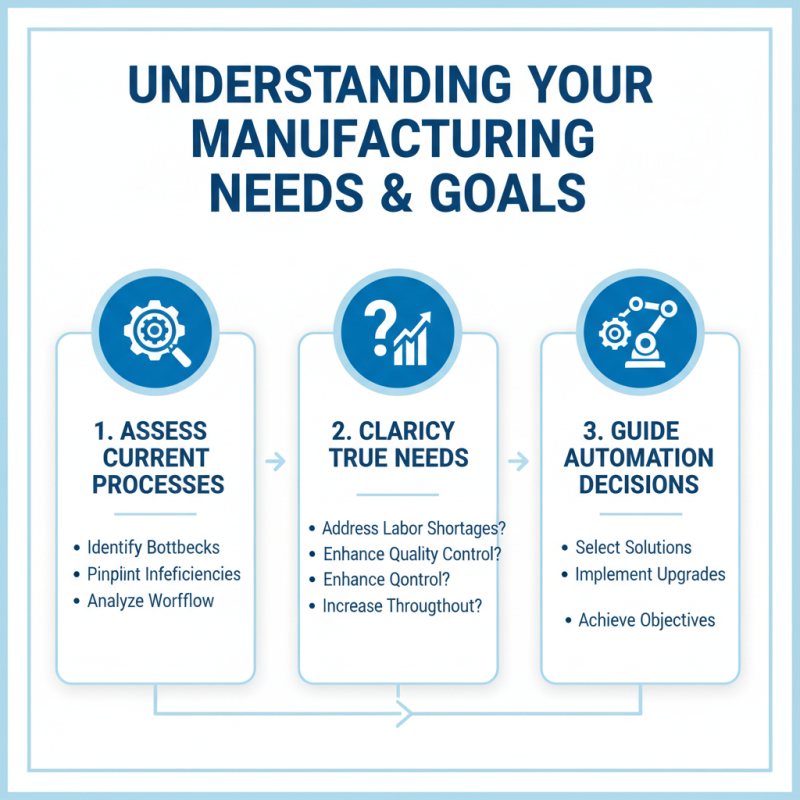
Understanding your manufacturing needs and goals is crucial when selecting automation solutions. Start by assessing your current processes. Identify bottlenecks and inefficiencies. This analysis helps clarify what you truly need. Are you facing labor shortages? Or maybe you need to boost quality control? Pinpointing these issues will guide your decision.
Consider your production volume and product variety. High-volume production benefits from specific automation tools. For more diverse outputs, flexible systems are key. Engage with your team to gather insights. They often have firsthand experience with daily challenges. Their input can uncover hidden needs. Also, think about your budget constraints. An expensive system may not always be the best fit.
Moreover, reflect on scalability. Will your chosen solution grow with your business? Some solutions may seem ideal now but could limit future expansion. It's essential to anticipate future requirements. Balancing immediate needs with long-term goals is challenging. But taking the time to evaluate can lead to more effective solutions in the long run.
Evaluating Different Types of Automation Technologies
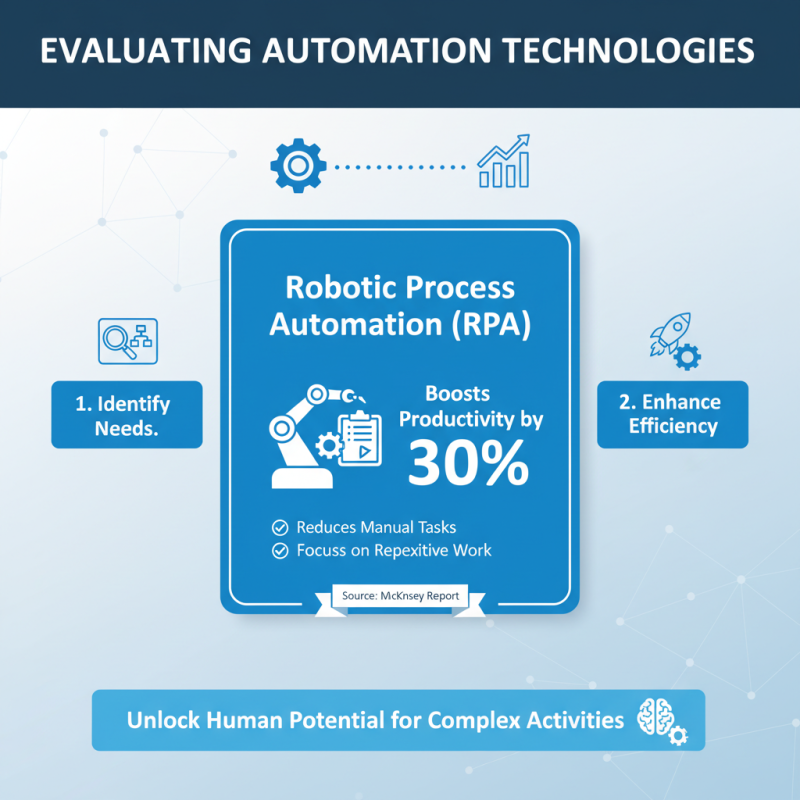
When evaluating different types of automation technologies, it’s crucial to identify specific operational needs. For instance, robotic process automation (RPA) can significantly enhance productivity by reducing manual intervention. According to a report by McKinsey, organizations that implemented RPA experienced a 30% increase in efficiency within the first year. This technology excels in repetitive tasks, freeing up human resources for more complex activities.
Another technology worth considering is machine vision systems. These systems offer precision and consistency in quality control. A study reported by MarketsandMarkets projected the machine vision market to reach $14.5 billion by 2025, underscoring its growing importance. However, learning curve challenges arise. Staff may need adequate training to operate these systems effectively.
Evaluating the integrability of these technologies with existing infrastructure is vital. Some organizations face integration hurdles, which can lead to frayed workflows. Additionally, while automation promises cost savings, initial implementation expenses can be high. Companies must weigh the long-term benefits against the upfront costs carefully. Ensuring the chosen technology aligns with strategic goals can make the difference between success and failure.
Assessing Compatibility with Existing Systems and Processes
When choosing manufacturing automation solutions, assessing compatibility with existing systems is crucial. Many companies underestimate this factor, leading to costly disruptions. According to a report by the International Federation of Robotics, 67% of companies experience integration issues during implementation. Understanding your current system’s architecture is vital before investing.
Evaluating the hardware and software in place can reveal potential obstacles. For example, outdated machinery may not support new automation technologies. It’s essential to assess network configurations and data formats. This knowledge allows for a smoother transition. Engage with your IT team for insights on compatibility.
Tip: Conduct a thorough impact analysis before upsizing your automation. Identify which processes can be improved without significant overhauls. Outline key performance indicators that align with new solutions. This step will foster efficient integration.
Establish clear communication lines. Employee feedback can highlight unforeseen integration challenges. Many firms neglect this aspect, which can result in underutilized systems. Continuous evaluation, based on your team's experiences, helps refine your automation strategy.
Manufacturing Automation Solutions Compatibility Assessment
Considering Budget Constraints and Potential ROI
Choosing the right manufacturing automation solutions involves a careful assessment of your budget and potential return on investment (ROI). According to a report by McKinsey, companies can expect an ROI of around 10 to 30 percent within the first year of implementing automation. However, this figure varies significantly depending on the automation solution selected.
Budget constraints often challenge manufacturers. Investing in automation without realistic financial planning can lead to unmet expectations. A study published by Deloitte indicates that 73% of manufacturers believe automation can reduce long-term operational costs. Yet, 60% face challenges due to initial investment costs. Companies should prioritize solutions based on their financial capacity while assessing long-term benefits.
It’s crucial to recognize that not all automation solutions fit every manufacturing environment. Overreliance on automated systems can lead to operational disruptions if expectations aren’t managed. Organizations should conduct thorough evaluations and pilot programs to gauge effectiveness before full implementation. Understanding the balance between upfront costs and predicted efficiencies can reveal the true value of automation investments. Many companies find that trial-and-error methods are valuable for refining their automation strategy.
How to Choose the Right Manufacturing Automation Solutions? - Considering Budget Constraints and Potential ROI
| Solution Type |
Initial Cost ($) |
Maintenance Cost/Year ($) |
Potential ROI (%) |
Payback Period (Years) |
| Robotic Process Automation |
50,000 |
5,000 |
150% |
2.5 |
| Automated Guided Vehicles |
120,000 |
10,000 |
200% |
3 |
| Conveyor Systems |
30,000 |
2,500 |
120% |
2 |
| 3D Printing |
25,000 |
1,500 |
110% |
2.25 |
Reviewing Vendor Support and Maintenance Options
When selecting manufacturing automation solutions, vendor support and maintenance options are crucial. A study from the International Society of Automation indicates that 70% of operational issues stem from inadequate support. Companies must prioritize providers that offer comprehensive training and ongoing assistance. A vendor's responsiveness can directly impact production efficiency.
Consider the scope of maintenance services included in the contract. Regular updates and proactive troubleshooting can significantly enhance system longevity. Data from the Manufacturing Institute shows that businesses with strong vendor partnerships see a 30% decrease in downtime. However, some firms neglect to assess these options adequately, risking costly interruptions.
Another aspect is understanding the vendor's reputation for reliability. Industry reports suggest that more than 60% of firms experience delays due to insufficient maintenance. Investing time in evaluating past customer experiences can provide valuable insights. Manufacturers should actively seek feedback on vendor support before making decisions.

 +86 15921716191
 Contact Phone
 Contact Email