How to Choose the Best Automated Production Line Equipment?
In the rapidly evolving landscape of manufacturing, the choice of Automated Production Line Equipment plays a critical role. John Smith, a leading expert in automation technology, once stated, "The right equipment can redefine efficiency and quality in production." This highlights the significance of selecting the appropriate tools for your production needs.
Choosing the best Automated Production Line Equipment is not merely a technical decision. It involves an understanding of your specific production goals and challenges. While advanced machinery offers numerous benefits, it can also present complexities. For instance, compatibility with existing systems, maintenance needs, and training requirements are essential considerations. Many companies overlook these factors, leading to inefficiencies.
Moreover, the market offers a variety of options, each claiming to boost productivity. However, products with too many features can complicate operations. A careful analysis, combined with expert advice, can mitigate potential risks. Ultimately, investing in the right Automated Production Line Equipment requires thoughtful reflection and strategic planning. This ensures that the chosen equipment aligns with long-term business objectives.
Factors to Consider in Selecting Automated Production Line Equipment
Choosing the right automated production line equipment requires careful consideration of several key factors. Firstly, the production capacity is essential. Industry data indicates that 60% of companies struggle with equipment scalability. A line that cannot adapt to increased output can hinder growth. Analyze current and predicted demands to ensure your equipment can handle fluctuations.
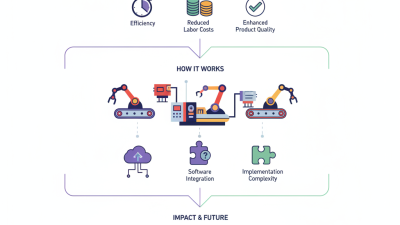
Next, integration capabilities are crucial. Research shows that over 40% of organizations face challenges when fitting new equipment into existing systems. Equipment should seamlessly connect with current software and machinery. This compatibility minimizes downtime and increases efficiency. Look for systems with advanced communication features. They enable real-time data exchange, enhancing overall production control.
Finally, assess the total cost of ownership. A report from an industry body reveals that maintenance often accounts for 15-20% of operational costs. Thus, it’s vital to evaluate not just the initial investment but also long-term expenses. Consider factors such as energy consumption and required upkeep. Some systems may seem cheaper upfront but could lead to substantial costs later. Reflect on these areas to avoid common pitfalls in equipment selection.
Understanding Your Production Requirements and Workflow Efficiency
Choosing the right automated production line equipment hinges on understanding your specific production requirements. Efficient workflow is crucial. According to a 2021 report by McKinsey, companies that optimize their production lines can increase productivity by up to 25%. Tailoring equipment to fit your workflow can minimize bottlenecks and reduce cycle times.
It's important to evaluate not only the equipment capacity but also its compatibility with existing processes. For example, a study by the International Society of Automation highlighted that 70% of manufacturers faced delays due to misalignment in equipment and workflow. Conduct a thorough needs assessment. Identify areas where automation could ease the burden on your workforce.
Tips: Consider implementing a flexible system that can adapt to changing production needs. Regularly review performance metrics and be open to adjustments. Embrace data analytics to pinpoint inefficiencies and enable continuous improvement. A thoughtful approach can reveal unexpected insights and lead to better decisions. This adaptability often reflects a company's willingness to embrace change, although it may be uncomfortable at first.
Evaluating Equipment Compatibility with Industry Standards and Regulations
When selecting automated production line equipment, evaluating compatibility with industry standards is crucial. Equipment must align with safety regulations and operational guidelines. Familiarizing yourself with these standards can mitigate risks. It ensures your production process remains efficient and compliant.
Consider the specific requirements of your industry. For example, some sectors have stringent safety protocols. Equipment that fails to meet these can lead to costly delays. Check certifications and testing records. They provide insights into performance and safety benchmarks. Lacking this information, you expose your facility to potential hazards.
Also, be wary of equipment that seems perfect at first glance. Perform a thorough review of compatibility. Assess if it can adapt to future regulations too. Gathering expert opinions may also help. Sometimes, the best solution isn't the most advanced technology but one that ensures long-term compliance. Balancing innovation with adherence to standards is key. There's no one-size-fits-all approach. Evaluate your unique needs carefully.
Production Line Equipment Compatibility with Industry Standards
This chart illustrates the compliance scores of various automated production line equipment with industry standards. Each bar represents the percentage of how well each piece of equipment adheres to the established regulations, helping in selecting the best options for production efficiency.
Analyzing Cost-Effectiveness and Return on Investment for Automation
Investing in automated production line equipment requires careful analysis of cost-effectiveness and return on investment (ROI). Businesses often underestimate hidden costs. These can include maintenance, employee training, and downtime. A thorough cost assessment should consider these factors. It helps to create a detailed budget, explicitly listing all expected expenses.
ROI should not just focus on immediate financial returns. Understanding long-term benefits is crucial. Automation can enhance productivity and reduce labor costs. However, calculating potential gains can be complex. It’s essential to evaluate how much time production can be accelerated. Knowing the average output increase can provide clearer insights into ROI.
Experience shows that companies often overlook the emotional aspects of automation. Staff may resist changes due to fears of job loss. Addressing employee concerns early can enhance acceptance. Implementing a gradual transition may yield better long-term results. Reflecting on these aspects can lead to a more informed decision.
Exploring Technological Advancements in Automation for Competitive Edge
The world of automation is rapidly evolving. Companies are increasingly turning to technological advancements to streamline production lines. According to a recent report by McKinsey, automation could boost productivity by up to 30% in the next decade. This shift is transforming industries, driving both efficiency and cost-effectiveness.
Investing in automated production line equipment offers a competitive edge. The global market for such technology is projected to reach $200 billion by 2025, driven by innovations in AI and robotics. These advancements facilitate faster production rates and improved quality control. However, integrating new systems is not without challenges. Employees may require retraining, and initial costs can be significant.
Embracing automation brings a need for continuous evaluation. Companies must regularly assess how new technologies align with their goals. Misalignment can lead to wasted resources and unmet expectations. Balancing innovation and practical implementation is crucial for maximizing the benefits of automation in production.

 +86 15921716191
 Contact Phone
 Contact Email