Top Rfid Labeling Systems For Industry How Do They Enhance Efficiency?
In today's fast-paced industrial landscape, efficiency is paramount. Rfid Labeling Systems For Industry represent a significant step forward in streamlining operations. These systems utilize radio-frequency identification technology to enhance tracking and inventory management. Their ability to provide real-time data can lead to informed decision-making.
Companies adopting Rfid Labeling Systems often experience noticeable improvements. For example, they can reduce the time spent on manual inventory checks. Each RFID tag carries vital information, making it easier to locate items quickly. However, implementation can pose challenges. Not all staff may be familiar with the technology, leading to potential errors. Training and adaptation are crucial.
Despite their advantages, Rfid Labeling Systems are not without flaws. Some industries might find initial costs daunting. Moreover, the reliance on technology could lead to vulnerabilities, such as system failures. Thus, while this technology offers significant benefits, reflection on its limitations is necessary. Balancing efficiency with risk management is an ongoing challenge for many organizations.

Top RFID Labeling Systems: Key Features and Industry Adoption
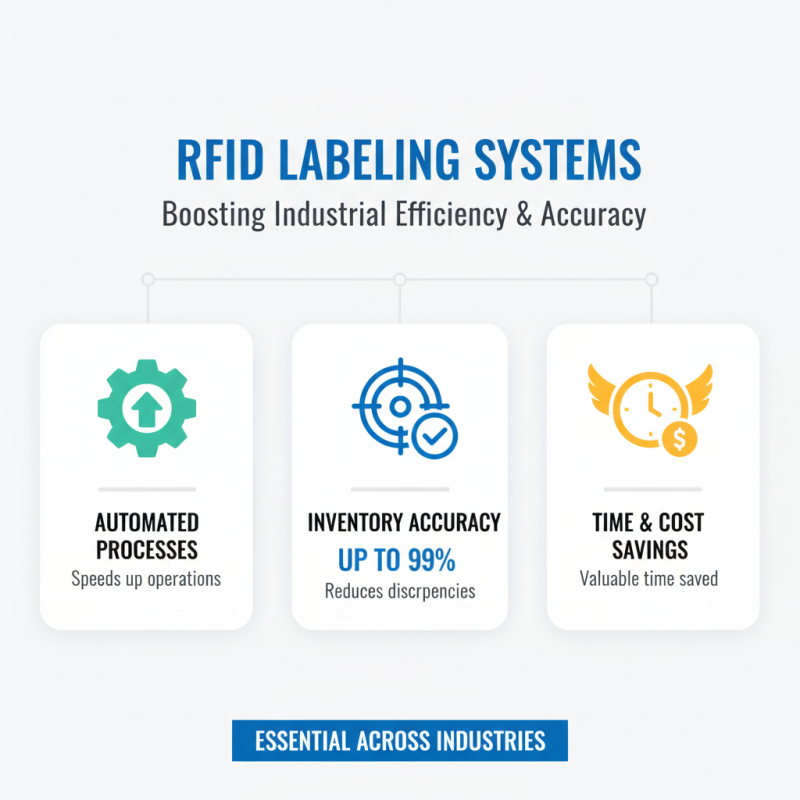
RFID labeling systems have become essential in various industries. These systems enhance efficiency by automating processes. Recent studies show that companies using RFID can improve their inventory accuracy by up to 99%. This precision significantly reduces stock discrepancies. It also speeds up operations, saving valuable time.
Key features of RFID systems include real-time tracking, bulk reading capabilities, and reduced labor costs. Real-time data allows businesses to monitor assets instantly. Bulk reading simplifies the process, as multiple items can be scanned simultaneously. However, the adoption of RFID systems is not without challenges. Some users face integration issues with existing technology. Additionally, training employees on new systems can take time. Statistics reveal that 48% of organizations still struggle with RFID implementation.
Industry adoption varies across sectors. Retailers often lead in using RFID for inventory management. In manufacturing, the focus shifts toward asset tracking. The transportation sector is catching up, driven by demand for improved logistics. Still, there is hesitation in some areas. Companies need to evaluate costs versus benefits carefully. Awareness of potential challenges is crucial for a smoother transition.
Efficiency Metrics: How RFID Labels Improve Supply Chain Management
RFID labels have transformed supply chain management. These labels provide real-time tracking of goods. This innovation reduces human error, yet it introduces new challenges. For instance, determining the correct placement of these labels is often overlooked.
Efficiency metrics reflect significant improvements in inventory accuracy. Companies experience faster order processing. This speed can enhance customer satisfaction, but RFID systems also require regular maintenance. Neglecting this can lead to downtime and inaccuracies. Employees must adapt to using this technology effectively.
Integrating RFID labels brings about transparency in the supply chain. Stakeholders can access product information instantly. However, this transparency raises concerns about data security. Companies need to balance efficiency and security to maximize benefits. Ensuring all team members are trained on best practices is crucial for success.
Impact on Inventory Accuracy: Data Supporting RFID Labeling Benefits
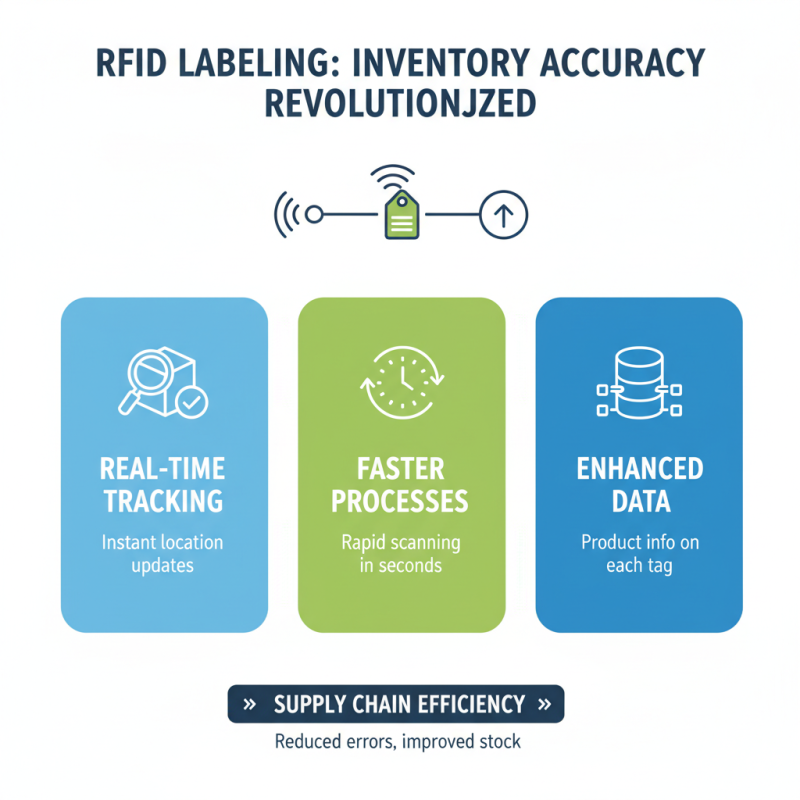
RFID labeling systems can significantly improve inventory accuracy. This technology allows businesses to track items in real-time. As products move through the supply chain, RFID tags provide instant updates. Each tag contains essential data about the product. Scanning these tags takes seconds, making processes faster.
In one case, a manufacturer noticed a 20% reduction in inventory errors after implementing RFID. This accuracy translates to fewer stockouts and overstock situations. An operation that once took hours now takes minutes. Still, some companies struggle with integration. They find it hard to align RFID with existing systems. Training staff can also be a barrier. These hurdles can slow down the transition.
However, the benefits often outweigh the challenges. Companies report improved visibility and control over inventory. An accurate inventory system enhances decision-making. With better data, businesses can forecast demand more reliably. Inventory discrepancies decrease, leading to cost savings. RFID stands out as a powerful tool, despite some operational hurdles.
Case Studies: Industry Leaders Utilizing RFID for Enhanced Operations
In recent years, many industries have adopted RFID technology for improved efficiency. Case studies show how leaders in logistics and retail utilize RFID systems. A report by GS1 states that companies using RFID see a 15% reduction in inventory costs. This substantial savings comes from real-time tracking and reduced stock discrepancies.
For example, a major retail chain implemented RFID tagging across its supply chain. They reported a 30% increase in stock accuracy. This led to fewer lost sales due to out-of-stock items. Workers could quickly locate products, speeding up restocking processes. However, not all implementations are seamless. Some staff felt overwhelmed by the new technology, highlighting the need for comprehensive training.
In the manufacturing sector, another study indicates that RFID can cut labor costs by up to 20%. A large manufacturing facility installed RFID to monitor raw materials. They faced initial challenges in tagging procedures. Over time, efficiency improved significantly. Yet, there were moments of frustration as systems occasionally misread tags. Proper adjustments are crucial for long-term success.
Top RFID Labeling Systems for Industry
This chart illustrates the percentage of efficiency improvement achieved through the implementation of RFID labeling systems in various industries. The data reflects the significant impact of RFID technology on operational efficiency across sectors such as Manufacturing, Logistics, Retail, Healthcare, and Automotive.
Future Trends in RFID Labeling Systems: Innovations and Market Growth
The RFID labeling system is evolving rapidly, shaped by new innovations. Real-time tracking technology is at the forefront, offering enhanced efficiency. Companies are now investing in smarter RFID tags that can store more data. This allows better inventory management and reduces human errors. As industries adopt these systems, their productivity skyrockets.
Market growth in RFID technology is striking. New materials and designs are appearing, improving durability and performance. For instance, flexible RFID tags can fit various products, from clothing to machinery. However, not all changes are perfect. Implementation can be complex, requiring training and adaptation. Some organizations struggle with integration into existing systems.
Future trends indicate a blend of RFID with IoT. This combination promises seamless data exchange across platforms. Forecasts suggest increased collaboration among industries. However, some companies may resist due to costs and uncertainty. The path ahead is promising but also challenging. Balancing innovation with practical application remains key.

 +86 15921716191
 Contact Phone
 Contact Email