What is Labeling And Packaging Automation and Why Does It Matter?
In the fast-evolving landscape of manufacturing, "Labeling And Packaging Automation" plays a crucial role. Industry expert John Smith once noted, “Automation in labeling can reduce errors significantly.” This statement reflects the importance of precision in production. As companies strive for efficiency, automating the labeling and packaging process becomes a necessity.
Automation not only enhances accuracy but also improves speed. With automated systems, businesses can scale up their production without compromising quality. Yet, the transition to full automation can be daunting. Many companies hesitate due to initial cost concerns and the complexity of integration.
However, the benefits often outweigh the challenges. Enhanced productivity leads to higher profits and customer satisfaction. It’s essential to evaluate the long-term advantages against immediate hurdles. Ultimately, embracing "Labeling And Packaging Automation" can pave the way for a more efficient and competitive future. This is a journey that requires thoughtful planning and reflection on both the present and the potential of innovation.

Definition and Overview of Labeling and Packaging Automation
Labeling and packaging automation refers to the use of machines to apply labels and package products efficiently. This process is crucial for modern manufacturing and distribution. By automating these tasks, companies can save time, reduce human error, and improve product consistency. Automated systems can label and package goods at a much faster rate than manual labor.
The technology behind labeling and packaging has advanced significantly. It now includes sophisticated software that can track inventory and analyze data. However, this automation can be complex. Companies sometimes struggle to integrate these systems with existing processes. Finding the right balance between automation and human oversight can be challenging. Some may overlook the necessity of regular maintenance and updates, which can lead to breakdowns.
Even with state-of-the-art solutions, imperfections can arise. Misalignment of labels or damaged packages happen more often than one might think. These issues can hinder productivity and lead to increased costs. Manufacturers must closely monitor these systems. Continuous improvement and training of staff are necessary to avoid recurring problems. In this fast-paced industry, learning from mistakes is essential for success.
Labeling and Packaging Automation Trends
This chart illustrates the perceived importance of various key benefits of labeling and packaging automation, with scores indicating how critical each aspect is considered in business operations. Higher scores reflect greater importance in driving efficiency and effectiveness in packaging processes.
Industry Trends: Growth Statistics in Automation Adoption Rates
In recent years, the adoption of labeling and packaging automation has significantly increased across various industries. According to industry reports, over 60% of manufacturers have reported implementing some level of automation in their packaging lines by 2023. This trend reflects a broader movement towards efficiency and cost reduction. Many companies are realizing that automation not only speeds up production but also improves accuracy.
Cost savings are another critical factor driving this growth. Studies show that businesses can reduce packaging costs by 20-30% through automation. However, transitioning to automated systems comes with challenges. Many companies struggle with initial investments and the complexity of integrating new technologies into existing processes. The learning curve can be steep, leading to frustration among employees accustomed to traditional methods.
Moreover, the industry is witnessing an increase in demand for sustainable packaging solutions. Automated systems can help address this need by optimizing materials usage. Many report a struggle to balance sustainability with efficiency. Companies must constantly reflect on how their choices impact both their bottom line and the environment. As automation continues to evolve, navigating these challenges will be vital for success in labeling and packaging sectors.
Cost Benefits: How Automation Reduces Labor and Operational Expenses
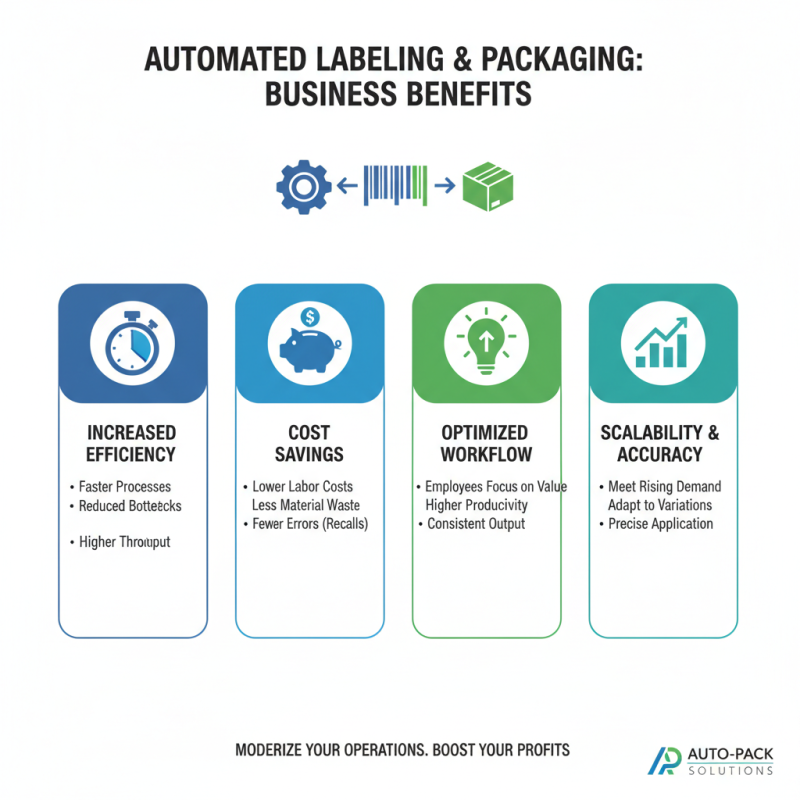
Labeling and packaging automation has become essential for businesses. It streamlines processes, making them faster and more efficient. Companies can now meet rising demands without hiring more workers. This method significantly cuts labor costs. When tasks are automated, employees can focus on higher-value activities. Productivity increases, and errors decrease, which also saves money.
Automation can lead to reduced operational expenses as well. Running machines requires less oversight than a large workforce. However, initial investments in technology can be daunting. Some firms hesitate, fearing it may not pay off. Yet, the long-term benefits often outweigh these concerns. Streamlined operations reduce waste and time. This means products get to shelves faster, benefiting both companies and consumers.
Yet, adopting automation isn't without its challenges. Companies must train staff to work alongside these new systems. Resistance to change can occur, leading to a rocky transition. The disconnect between technology and human workers can create tension. Balancing automation with human touch is crucial. As companies adapt, careful evaluation of processes will ensure they achieve desired outcomes.
Case Studies: Successful Implementation of Automation in Various Sectors
Labeling and packaging automation has become crucial across various sectors. A 2021 report noted that 90% of manufacturers reported increased efficiency after implementing automation. This was evident in the food and beverage industry, where automation reduced packaging errors by up to 50%. Companies that embraced this technology saw faster production cycles and improved product consistency.
In the pharmaceutical sector, automation minimized human errors, which are critical in this highly regulated field. One case involved a leading manufacturer that automated its labeling process, resulting in a 30% decrease in compliance-related issues. Despite these successes, some organizations still struggle with the transition. Resistance to change and employee retraining can slow down progress.
Additionally, the sustainability of materials used in automated packaging remains a concern. The push for eco-friendly solutions can conflict with automation goals. While some companies excel in innovation, they must balance speed and sustainability. The journey toward full automation is ongoing, with both successes and challenges.
What is Labeling And Packaging Automation and Why Does It Matter? - Case Studies: Successful Implementation of Automation in Various Sectors
| Sector |
Automation Type |
Benefits |
Implementation Duration |
Cost Saving (%) |
| Food & Beverage |
Automated Labeling |
Increased speed, reduced errors |
6 months |
20% |
| Pharmaceuticals |
Packaging Automation |
Compliance with regulations, improved traceability |
1 year |
15% |
| Consumer Goods |
Labeling Systems |
Enhanced product presentation, faster turnaround |
8 months |
25% |
| Electronics |
Automated Inspection |
Reduced defects, improved quality control |
9 months |
30% |
| Cosmetics |
Robotic Packing |
Faster packing, reduced labor costs |
7 months |
22% |

 +86 15921716191
 Contact Phone
 Contact Email