Why Custom Labeling Automation Systems Are Essential for Modern Businesses?
In today's fast-paced business landscape, efficiency and accuracy are more critical than ever. Custom Labeling Automation Systems serve as a vital tool for modern enterprises seeking to enhance their operational capabilities. These systems streamline the labeling process, reducing human error and improving productivity. They make it easier for businesses to meet compliance standards while maintaining high-quality outputs.
Imagine a manufacturing line where every label is accurate, each detail perfectly aligned. Custom Labeling Automation Systems ensure this vision becomes reality. They provide the flexibility to adapt to varying product types and labeling needs, saving valuable time and resources. However, some companies still struggle to embrace these systems fully. They may overlook the potential benefits, leading to inefficiencies.
The challenge lies in change management. Not every business is equipped to transition effortlessly to automation. Teams must retrain and adapt to new workflows, which can be difficult. Yet, this adaptation is essential for staying competitive. Implementing Custom Labeling Automation Systems could mean the difference between thriving and merely surviving in the market.
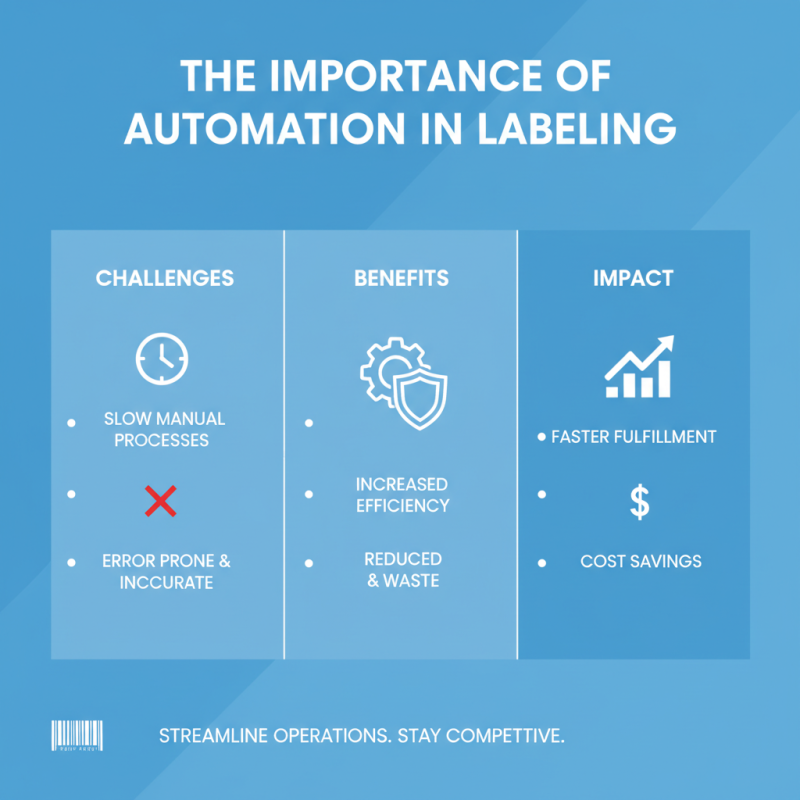
The Importance of Automation in Labeling Processes
In today's fast-paced world, automation in labeling processes is vital. Businesses grapple with increasing demands and competition. Efficient labeling can streamline operations significantly. Manual processes often lead to errors and delays. Automated systems reduce these risks.
Tips: Regularly assess your labeling system. Are errors affecting your brand? Identify bottlenecks in your processes. Small tweaks can yield better results.
The importance of automation extends beyond just speed. Custom labeling systems adapt to specific needs. They handle various label formats and sizes. This flexibility is crucial in today’s diverse market. However, not all businesses leverage these systems effectively. Some may resist change due to costs or complexity.
Tips: Start small with automation. Test the waters before fully committing. Analyze the impact on your workflow. Automation should empower your team, not overwhelm it.
Benefits of Custom Labeling Automation for Businesses
Custom labeling automation systems offer significant advantages for modern businesses. They streamline operations, reduce labor costs, and enhance productivity. One of the key benefits is accuracy. Automated systems minimize human error in labeling, which is essential for compliance and consumer trust. In industries like food and pharmaceuticals, precise labeling can directly affect safety and quality.
Another notable benefit is speed. Automated systems can label products much faster than manual processes. This speed allows businesses to meet customer demands more efficiently. Quick turnaround times help reduce backlogs and improve customer satisfaction. However, transitioning to automation can be challenging. Companies must invest time in training staff and integrating new technologies.
Tip: Always start with a pilot program. This approach helps assess how automation fits your specific needs.
Customization is also a significant advantage. Businesses can tailor labels to meet their branding and regulatory requirements. This flexibility can differentiate a product in a competitive market. While customization is beneficial, it requires ongoing assessment to ensure it meets evolving consumer preferences.
Tip: Regularly review your labeling processes for improvement areas. Even small adjustments can lead to substantial gains.
Key Features of Modern Custom Labeling Systems
Custom labeling automation systems are becoming indispensable in today's business landscape. According to a recent report by Smithers Pira, the global labeling market is projected to reach over $50 billion by 2025. This growth underscores the need for businesses to adopt efficient labeling solutions. Modern custom labeling systems offer various key features that cater to the needs of diverse industries.
One crucial feature is flexibility. Custom labeling systems allow for quick adjustments to designs and sizes. Businesses can easily change labels without incurring significant downtime. Real-time printing capabilities reduce production delays. Automation integrates seamlessly, enabling businesses to scale operations rapidly. Companies like manufacturers and retailers benefit from improved accuracy, as automated systems minimize human errors.
Additionally, data integration is essential for personalization. Modern systems can sync with inventory management software. This integration provides accurate labeling that reflects real-time stock levels. A study indicated that businesses utilizing automated systems reported a 30% increase in efficiency. Still, some companies struggle with the initial setup and training processes, which can be daunting. However, overcoming these challenges often leads to significant long-term gains. Adjustments may be necessary, as fewer businesses have fully optimized their systems yet.
Why Custom Labeling Automation Systems Are Essential for Modern Businesses? - Key Features of Modern Custom Labeling Systems
| Feature |
Description |
Benefits |
Use Cases |
| High-Speed Printing |
Fast and efficient printing to meet production demands. |
Increased productivity and reduced lead times. |
Food packaging, retail labels. |
| Customizable Design Options |
Tailor-made designs that fit specific branding needs. |
Enhanced brand recognition and customer engagement. |
Promotional products, seasonal packaging. |
| Integration with Inventory Systems |
Seamless connection with existing inventory management solutions. |
Improved inventory accuracy and reduced errors. |
Warehouse operations, distribution centers. |
| Variable Data Printing |
Ability to print different information on each label. |
Personalized labeling for customer satisfaction. |
Direct mail campaigns, product serialization. |
| Robust Quality Control |
Automated checks to ensure label quality before distribution. |
Minimized waste and maintained quality standards. |
Pharmaceuticals, cosmetics. |
Challenges Faced by Businesses Without Automation
In today's fast-paced business environment, the absence of automation technologies can significantly hinder efficiency. Companies that operate without custom labeling automation often face various challenges. According to a report by the National Association of Manufacturers, manual labeling processes can cost businesses up to 20% in labor inefficiencies. This inefficiency stems from human errors, such as mislabeling products, leading to costly product recalls.
Additionally, companies struggle to keep up with compliance requirements. The FDA and other regulatory bodies often change labeling requirements. Without an automated system, organizations may find it hard to adapt, resulting in penalties. A study from ComplianceOnline indicated that 45% of businesses that fail to update labels in compliance face substantial legal repercussions. This highlights the urgency of incorporating automation systems into operations.
Tip: Consider investing in training for your staff on labeling compliance. This can reduce errors caused by lack of knowledge.
Another challenge is managing label inventory. Businesses may experience overstocking or running out of labels. This creates further delays and complications. An estimated 30% of companies face these inventory issues according to research from Gartner. Automation can streamline inventory management, allowing real-time tracking and reducing waste.
Tip: Regularly assess your inventory processes. Identify patterns that lead to shortages or excesses, and adjust your systems accordingly.
Future Trends in Custom Labeling Automation Technology
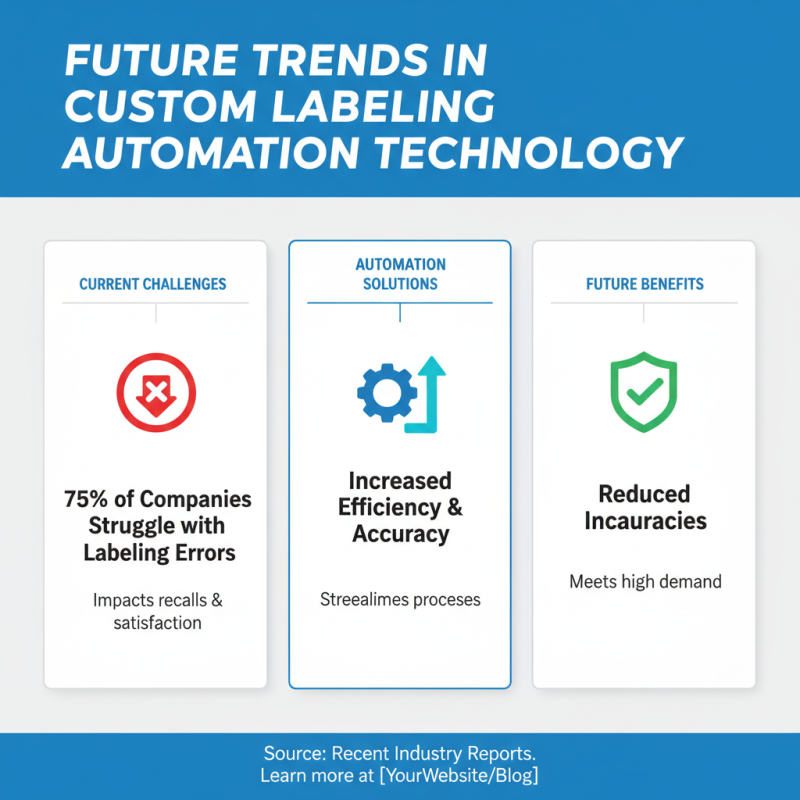
The landscape of custom labeling automation technology is evolving rapidly. Businesses face growing pressures to increase efficiency while maintaining accuracy. Recent reports show that 75% of companies struggle with labeling errors, impacting product recall rates and customer satisfaction. Implementing automated systems can reduce these inaccuracies significantly. The technology promises to streamline processes, helping businesses keep up with high demand.
Future trends indicate a shift toward more sophisticated automation solutions. Artificial intelligence and machine learning will enhance labeling systems, allowing for greater customization and flexibility. Predictions suggest that by 2025, 60% of labeling processes could be fully automated. This is a significant increase from the current 30%. However, the integration of these advanced technologies may pose challenges, including the need for employee retraining and potential technology costs.
Visual recognition tools are also gaining traction in the industry. These innovations allow machines to adapt to new label designs quickly. Such progress is encouraging, but it requires companies to continuously assess their capabilities and readiness for change. The road to automation appears promising but also demands a critical evaluation of existing workflows to avoid pitfalls. Embracing this technology can bring considerable advantages, yet it also requires careful planning and a willingness to adapt.

 +86 15921716191
 Contact Phone
 Contact Email