Best Labeling Machines For Bottles in 2026 What to Consider?
In the fast-evolving world of packaging, choosing the right Labeling Machines For Bottles is crucial. Industry expert, Jane Smith, emphasizes, "Quality labeling impacts brand recognition." This statement reflects the importance of effective labeling in a competitive market.
As we look to 2026, various features will shape the selection of labeling machines. Speed, precision, and versatility cannot be overlooked. A machine that easily adapts to different bottle sizes and shapes can significantly enhance productivity. However, businesses should consider their specific needs before investing. Are they focused on high volume or niche production?
In this quest for the best Labeling Machines For Bottles, some choices may lead to underwhelming results. It’s vital to distinguish between price and value. A cheaper machine might lack crucial features, leading to frustration. Therefore, careful thought and planning are necessary to achieve optimal labeling solutions.

Overview of Labeling Machines for Bottles in 2026
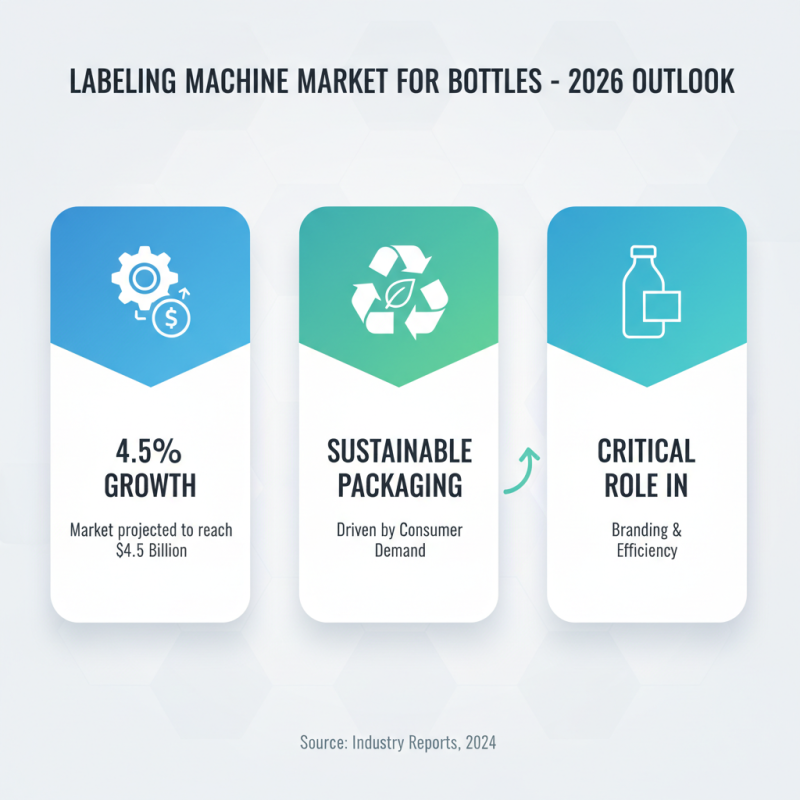
In 2026, the labeling machine market for bottles will undergo significant advancements. As consumer demands shift towards more sustainable packaging, manufacturers must adapt. The global labeling machine market is projected to grow by 4.5% annually, reaching approximately $4.5 billion. This growth highlights the critical role labeling machines play in branding and efficiency.
When selecting a labeling machine, consider speed and precision. Machines designed for higher output can label 300 bottles per minute. This can drastically reduce labor costs and increase productivity. The accuracy of labels is equally important. Misalignment can lead to customer dissatisfaction, impacting sales. Minor errors can create a ripple effect that may require a re-labeling process.
Tips: Choose machines that allow quick changeovers. Frequent product updates demand flexibility. Opt for user-friendly designs, as operators often face steep learning curves. Machine efficiency varies, so assess your production needs carefully. Investing in reliable machinery can improve your bottom line, even if initial costs seem high. Remember, not all machines provide the same durability. Some may require frequent repairs or replacements. Assess your long-term strategy to avoid unforeseen expenses.
Key Features to Consider When Choosing a Labeling Machine
When selecting a labeling machine for bottles, several key features must be carefully evaluated. Speed is critical. Machines can label up to 300 bottles per minute, enhancing productivity significantly. However, high speed may lead to inaccuracies. A balance between speed and precision is essential.
Adjustability is another important factor. Machines that accommodate different bottle sizes and shapes offer versatility. Research suggests that businesses can reduce bottlenecks by up to 20% with adjustable systems. Ease of use cannot be overlooked. User-friendly interfaces save time during setup and operation. A complex machine might deter operators, reducing overall efficiency.
Maintenance requirements also play a key role. Machines that are easy to clean and maintain reduce downtime. In a study, companies noted a 15% increase in uptime with machines designed for quick maintenance. It’s crucial to consider future needs as well. Will the machine support additional features or upgrades? Predicting future requirements can prevent costly replacements. Thoughtful consideration of these features can lead to a better investment.
Different Types of Labeling Machines Suitable for Bottles
When choosing labeling machines for bottles, it’s crucial to understand the various types available. Labeling machines can be broadly categorized into three main types: semi-automatic, fully automatic, and digital. Semi-automatic machines are cost-effective and versatile. They require manual assistance but are ideal for smaller production runs. Fully automatic machines are suitable for high-volume operations. They streamline the process, reducing labor costs significantly. According to industry reports, the fully automatic segment is expected to grow at a CAGR of 6.4% by 2026.
Digital labeling machines represent the latest innovation. These machines allow for quick changes in labels and are perfect for businesses that require flexibility. They can print labels on demand, saving time and storage space. A recent study revealed that 57% of companies are adopting digital solutions for their packaging needs. However, some businesses may struggle with the high initial investment. This could impede adoption for smaller entities. While the digital option sounds promising, the learning curve can be steep.
Consideration of the specific type of bottles is also important. Bottles come in various shapes and sizes, impacting the choice of a labeling machine. Curved surfaces, for instance, may pose a challenge. Not all machines handle curvature well. Additionally, businesses must also be aware of the machine's speed and accuracy. A balance between efficiency and precision is paramount. Adjusting these factors often requires iterative testing, which can delay production.
Best Labeling Machines for Bottles in 2026
Factors Affecting the Cost of Bottle Labeling Machines
When considering bottle labeling machines, cost is a crucial factor. Multiple elements influence pricing. The technology used is significant. Advanced systems, like those with automated features, tend to be pricier. According to industry reports, machines with integrated sensors and software capabilities can increase costs by 20% to 50%.
Materials and build quality also affect machine expenses. Stainless steel options usually offer durability and longevity. However, they come at a higher initial investment. Experts suggest that investing in quality can reduce maintenance and replacement costs.
Tips: Always assess the production volume. Choose a machine that matches your needs. Buying a high-speed machine for low volume is excessive. Think about future needs too. If you plan to expand, opt for machines with upgrade options. Balancing initial cost with long-term value is vital.
Future Trends in Bottle Labeling Technology for 2026
As we approach 2026, the bottle labeling technology is set to evolve significantly. Automation will play a critical role. Labels will be applied more quickly and accurately. Machines will integrate advanced sensors to improve alignment and positioning. This will reduce errors and waste.
Sustainability will also be a hot topic. Eco-friendly materials are gaining traction. Compostable and recyclable labels will be preferred. Many companies are beginning to consider the environmental impact of their packaging. However, the transition may not be seamless. There may be issues with durability and cost.
Customization options will increase. Companies will seek flexibility to meet diverse customer needs. Short runs of customized labels may become more common. Yet, this could strain production efficiency. Finding the right balance between customization and speed will be a challenge. The future holds promise, but reflections on these trends are necessary.
Best Labeling Machines For Bottles in 2026 What to Consider? - Future Trends in Bottle Labeling Technology for 2026
| Feature |
Description |
Importance |
Trend Projection for 2026 |
| Speed |
Rate at which labels can be applied to bottles per minute. |
High-speed machines are crucial for large production volumes. |
Continued push for higher speeds and efficiency. |
| Labeling Precision |
Accuracy in label placement on the bottle. |
Ensures cleanliness and professionalism in packaging. |
Emerging technologies promising higher precision. |
| Ease of Use |
User-friendly controls and setup processes. |
Reduces training time and operational errors. |
Developments focusing on intuitive interfaces. |
| Cost Efficiency |
Operational costs versus production output. |
Critical for maximizing profit margins. |
Advancements in technology increasing ROI. |
| Compatibility |
Ability to work with different bottle sizes and label types. |
Versatility needed for diverse product lines. |
Increased demand for multi-purpose labeling machines. |

 +86 15921716191
 Contact Phone
 Contact Email